Car Accident Truck Accident Bus Accident Uber / Lyft Motorcycle Accident Train / CTA Airplane / Aviation Slip / Fall Construction Workers' Comp Medical Malpractice Birth Injury Cerebral Palsy Brain Injury Spinal Cord Injury Products Liability Dog Bite Wrongful Death
⭐ 98% Case Recovery Rate | 💰 $30M+ Recovered for Clients | Free Consultation 24/7 | ✅ No Fee Unless We Win
Chicago Catastrophic Injury Attorney · Free Case Review

🧠 Chicago Brain Injury Lawyer
Traumatic Brain Injury (TBI) Attorney

A traumatic brain injury changes everything — your work, your relationships, your independence. Schwaner Injury Law represents Chicagoans with concussions, contusions, diffuse axonal injuries, subdural and epidural hematomas, intracerebral hemorrhages, and anoxic brain injuries from car crashes, falls, sports injuries, assaults, and medical malpractice. We build TBI cases with neurologists, neuropsychologists, life-care planners, and forensic economists — and we don't settle for less than your future is worth.

By David J. Schwaner, J.D. · Loyola University Chicago School of Law · Illinois Bar 2005
Reviewed and updated by David J. Schwaner, J.D. — 2026-05-06 Illinois Personal Injury Attorney · 20+ Years Experience
Immediate Steps

What to Do After a Brain Injury in Chicago

  • Call 911 — even seemingly minor head injuries can be life-threatening within hours
  • Demand a CT scan and MRI — request copies of all neuroimaging
  • Document the Glasgow Coma Scale (GCS) score recorded by EMS and the ER
  • Follow up with a neurologist — concussion symptoms can appear days later
  • Get baseline neuropsychological testing to document cognitive deficits
  • Keep a daily symptom journal — headaches, memory lapses, mood changes
  • Contact a Chicago brain injury attorney before giving any insurance statement
Common Causes

Common Causes of TBI Cases

  • Car and truck collisions — coup-contrecoup and diffuse axonal injury
  • Falls — leading cause of TBI for adults over 65 and young children
  • Sports and recreation — concussions, second-impact syndrome, CTE risk
  • Assaults and acts of violence — subdural hematoma is common
  • Medical malpractice — failure to diagnose stroke, anesthesia errors
  • Birth-related hypoxic-ischemic encephalopathy (HIE) — anoxic brain injury
  • Workplace falls and struck-by-object accidents (construction sites)
Settlement Ranges

Compensation in Illinois Brain Injury Cases

Every case is unique, but Illinois TBI verdicts and settlements typically fall into these ranges based on injury severity:

  • Mild TBI / Concussion: $50,000 – $300,000 — short-term cognitive symptoms, post-concussion syndrome, lost wages during recovery
  • Moderate TBI: $500,000 – $2,000,000 — documented cognitive deficits on neuropsych testing, partial return to work, ongoing therapy
  • Severe TBI: $2,000,000 – $10,000,000+ — permanent disability, loss of earning capacity, long-term care, life-care plan
  • Past and future medical expenses — neurosurgery, rehabilitation, neuropsychology
  • Lost wages and lost earning capacity — calculated by forensic economists
  • Pain and suffering — no statutory cap in Illinois (Lebron v. Gottlieb)
  • Loss of normal life and disability — cognitive, behavioral, and personality changes

Get Your Free Brain Injury Case Review

Schwaner Injury Law offers free, confidential consultations 24/7. No fee unless we win. Tell us what happened and we'll tell you if you have a case — no obligation.

Call (312) 635-4000 📋 Send Us Your Case

Available 24/7 · Free · No obligation · Confidential

Our Process

How We Handle Brain Injury Cases

From first call to final settlement or verdict — here's exactly how David Schwaner builds and wins TBI cases in Cook County.

1

Free Consultation

You speak directly with David Schwaner — not an intake clerk — about your TBI, the events causing it, and your prognosis. We'll explain Illinois law and what your case could be worth.

2

Medical & Neurological Workup

We coordinate with neurologists and neuropsychologists to fully document the injury — DTI MRI, SPECT scans, neuropsych batteries. Many TBIs missed on routine ER scans show clearly on advanced imaging.

3

Life-Care Plan & Damages Model

For moderate and severe TBIs, we retain a life-care planner and a forensic economist to calculate lifetime medical costs, lost earning capacity, and the full economic impact of the injury.

4

Settlement or Trial

Insurers know TBI cases can produce 7- and 8-figure verdicts. If they refuse to pay fairly, David Schwaner takes the case to a Cook County jury. We don't accept lowball offers.

5

You Get Paid

You receive your settlement or verdict. Our fee comes only from your recovery — zero out of pocket costs to you. No fee unless we win, guaranteed.

Know Your Rights

Illinois Law & Your Brain Injury Rights

TBI litigation in Illinois turns on specific statutes, evidentiary standards, and damages rules. Here's what every Illinois brain injury victim needs to know.

Illinois TBI Law: Statutes, Evidence & Damages

  • ⚖️Statute of Limitations: 2 years from date of injury for personal injury claims (735 ILCS 5/13-202). Tolled for minors until age 18.
  • ⚖️Medical Malpractice TBI: 2 years from date of discovery + 4-year statute of repose under 735 ILCS 5/13-212. Birth-injury HIE claims have an 8-year SOL with cap at age 22.
  • ⚖️Glasgow Coma Scale Evidence: Initial GCS scores from EMS and the ER are critical evidence of injury severity (mild 13–15, moderate 9–12, severe 3–8).
  • ⚖️Neuropsychological Testing: Illinois courts routinely admit neuropsych test results to prove cognitive deficits even when imaging appears normal.
  • ⚖️Lost Earning Capacity: Recoverable as economic damages — no cap. Forensic economists testify to lifetime earnings differential.
  • ⚖️No Damages Cap: Illinois has no statutory cap on pain and suffering or non-economic damages (Lebron v. Gottlieb Memorial Hospital, 2010).
  • ⚖️Comparative Fault: Illinois follows modified comparative negligence — you can recover so long as you are 50% or less at fault (735 ILCS 5/2-1116).
Why Choose Us

Why Chicago TBI Victims Choose Schwaner Injury Law

$30M+ Recovered

David Schwaner has recovered more than $30 million for injured Chicagoans, including catastrophic brain injury verdicts and settlements.

20+ Years Experience

Two decades handling complex TBI litigation in Cook County — David knows the medicine, the experts, and the courtroom.

Medical Network

We work with top Chicago neurologists, neuropsychologists, and life-care planners to fully document your TBI and its lifetime impact.

Zero Fees Unless We Win

No upfront costs. No fees unless we win your case. We advance all litigation expenses including expert witnesses.

More Questions Answered

Brain Injury Questions — Answered by David Schwaner

Illinois-specific answers to the questions TBI victims and families ask most. If your question isn't here, call (312) 635-4000 — David answers personally.

How is a brain injury different from a spinal cord injury?

A traumatic brain injury (TBI) damages the brain itself — affecting cognition, memory, mood, and behavior — while a spinal cord injury damages the nerves in the spinal column, typically causing paralysis below the injury site. They can occur together (especially after high-impact crashes), but they require different medical experts, different damages models, and different litigation strategies. A TBI case relies on neuropsychologists, neurologists, and life-care planners; an SCI case relies on physiatrists, rehabilitation specialists, and vocational experts.

What is a mild TBI worth in Illinois?

Mild traumatic brain injuries (often called concussions) typically settle in Illinois between $50,000 and $300,000, depending on documented cognitive symptoms, lost wages, treatment duration, and whether post-concussion syndrome persists. Cases with permanent cognitive deficits documented by neuropsychological testing routinely exceed that range. Moderate TBIs settle in the $500,000 to $2 million range, and severe TBIs with permanent disability commonly result in verdicts and settlements of $2 million to $10 million or more.

Do I have a brain injury case if my CT scan and MRI look normal?

Yes. Most mild and moderate TBIs are not visible on standard CT or MRI scans because the damage is microscopic axonal injury, not bleeding or structural damage. Diffuse axonal injury, post-concussion syndrome, and many functional brain injuries are diagnosed through neuropsychological testing, DTI MRI, SPECT scans, and clinical examination. Insurance defense lawyers love to argue "the scans are clean," but the medical literature is very clear that normal imaging does not rule out a real brain injury.

How does Illinois prove a brain injury in court?

Illinois TBI cases are typically proven with a combination of: emergency Glasgow Coma Scale scores from the date of injury, neuroimaging (CT, MRI, DTI), neuropsychological testing comparing pre-injury to post-injury function, treating physician testimony from neurologists and neuropsychologists, day-in-the-life videos showing functional limitations, and family/coworker testimony documenting personality and cognitive changes. Vocational experts and economists then quantify the lost earning capacity.

What is the statute of limitations for a brain injury claim in Illinois?

Illinois has a 2-year statute of limitations for personal injury claims under 735 ILCS 5/13-202, including brain injuries. The clock generally starts on the date of injury. There are critical exceptions: minors have until age 20 to file (the SOL is tolled until age 18, then runs 2 years), and medical malpractice TBI claims are subject to the 4-year statute of repose under 735 ILCS 5/13-212. Wrongful death claims arising from a fatal brain injury have their own 2-year SOL from date of death.

Can I recover lost earnings if my brain injury affects my cognitive ability?

Yes. Illinois law allows recovery for both past lost wages and lost earning capacity. If a TBI prevents you from returning to your prior profession — or limits the type of work you can do — a vocational rehabilitation expert and a forensic economist will calculate the lifetime earnings differential. For high-earning professionals (surgeons, executives, attorneys, engineers), lost earning capacity damages on a severe TBI routinely exceed $2 million on their own. Illinois does not cap economic damages.

Are pain and suffering damages capped for brain injury cases in Illinois?

No. The Illinois Supreme Court struck down non-economic damage caps in personal injury and medical malpractice cases as unconstitutional (Lebron v. Gottlieb Memorial Hospital, 2010). Illinois TBI victims can recover the full value of their pain and suffering, loss of normal life, disfigurement, and emotional distress with no statutory cap. This is one reason Illinois is considered a favorable forum for catastrophic brain injury cases.

How much does a brain injury lawyer cost? Do you work on contingency?

Schwaner Injury Law handles all brain injury and TBI cases on a contingency fee basis — you pay nothing unless we recover money for you. We advance all litigation costs (medical experts, neuropsychologists, life-care planners, depositions, court fees) and only get paid as a percentage of the recovery. The initial consultation is always free and confidential. Call (312) 635-4000 to speak directly with David Schwaner.

🧠 Serving Chicagoland

Chicago Brain Injury Attorney — Serving All of Chicagoland

Schwaner Injury Law handles brain injury and TBI cases throughout the Chicago metropolitan area including Chicago, Evanston, Oak Park, Skokie, Berwyn, Cicero, Logan Square, Pilsen, Hyde Park, Lincoln Park, Wicker Park, Bucktown, Rogers Park, Lakeview, Wrigleyville, Naperville, Aurora, Schaumburg, and throughout Cook, DuPage, Lake, Kane, and Will counties. Wherever you suffered a brain injury in northeastern Illinois, David Schwaner can help. Call (312) 635-4000 for a free consultation. Available 24/7, no fee unless we win.

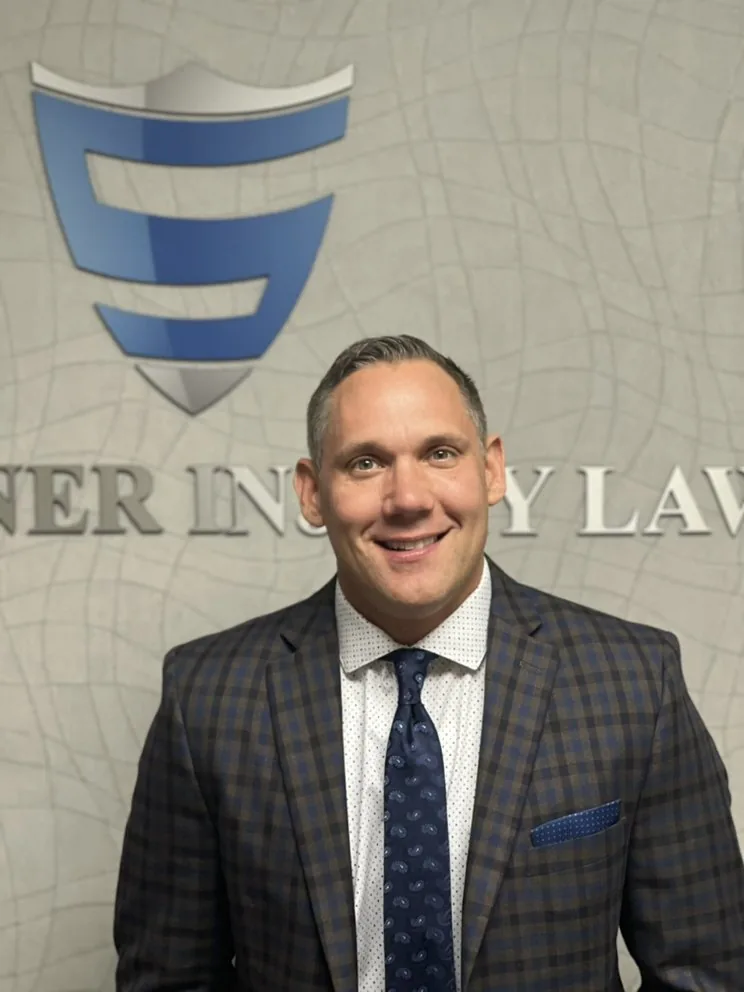
David J. Schwaner, J.D. — Chicago personal injury attorney

About the Author — David J. Schwaner, J.D.

David J. Schwaner is a Chicago personal injury and catastrophic injury attorney with more than 20 years of trial experience and over $30 million recovered for injured Illinoisans. After graduating from Loyola University Chicago School of Law and being admitted to the Illinois bar in 2005, David built a practice focused on brain injuries, spinal cord injuries, medical malpractice, and other catastrophic cases. He has a 98% case recovery rate, represents clients in English and Spanish, and works directly with each client from intake through trial.

JD · Loyola Chicago Law IL Bar 2005 ISBA Member ITLA Member Super Lawyers Rated Avvo Top Attorney English · Español